

What Are Body-Focused Repetitive Behaviors (BFRBs)?
If you find yourself repeatedly pulling your hair, picking at your skin, or trapped in other similar habits that feel hard to stop, you might be experiencing something called a body-focused repetitive behavior, or BFRB. Two of the most common BFRBs are hair-pulling (also called trichotillomania) and skin picking (also called excoriation, or dermatillomania). Other BFRBs include lip biting, cheek chewing, or hair chewing. They can be driven by habit or by boredom. They can also be driven by anxiety or stress. BFRBs can seem like harmless quirks. However, when they get out of control, they can cause real physical and emotional problems.
On their own, behaviors like popping a pimple or plucking a hair aren’t unusual – many people do them from time to time. But if the behavior starts to feel hard to control, causes noticeable damage, or is followed by feelings of shame, anxiety, or frustration, you may be dealing with a BFRB. You might feel alone in this, but you’re not! These conditions are relatively common; research suggests that around 1.7% of adults experience hair-pulling, and between 1.4% and 5.4% struggle with skin picking.
Types of BFRBs
The most common body-focused repetitive behaviors are:
- Trichotillomania: repetitive hair pulling from the scalp, eyebrows, eyelashes, or other areas
- Dermatillomania (excoriation disorder): repetitive skin picking that can lead to scarring or bleeding
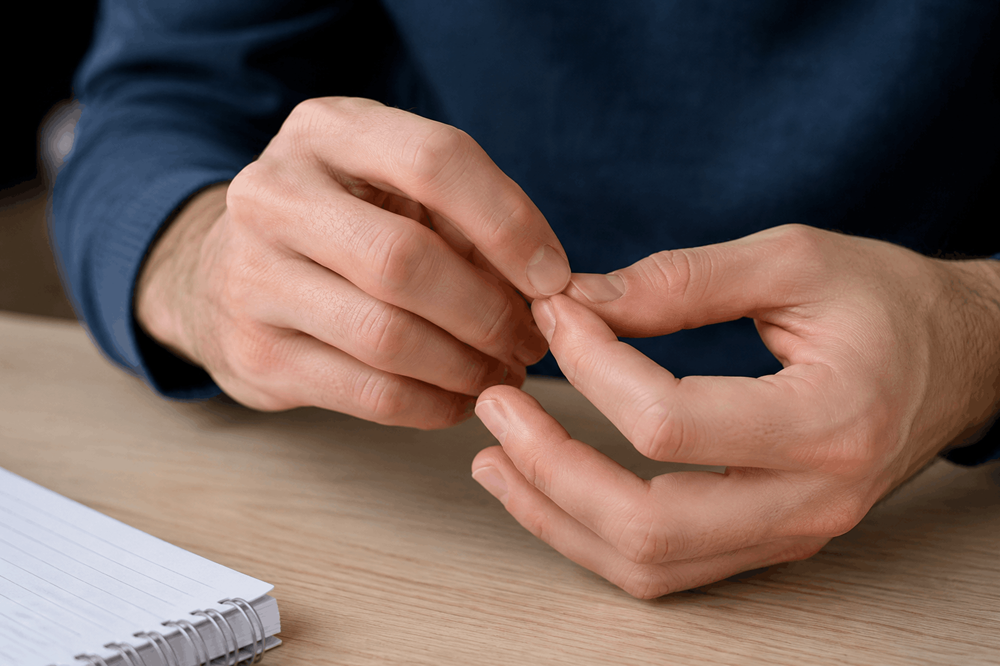
- Nail biting: chronic biting or picking at fingernails or cuticles
- Cheek or lip biting: repetitive biting of the inside of the mouth or lips
- Hair chewing (trichophagia): chewing or eating pulled hair
Some repetitive behaviors may resemble BFRBs but are understood differently clinically. For example, repetitive washing behaviors are more commonly associated with obsessive-compulsive disorder (OCD), while motor or vocal tics are classified separately as tic disorders. Behaviors involving intentional self-injury are also generally not considered BFRBs.
Why Do BFRBs Happen?
It’s not always possible to figure out why a BFRB began. Often it’s easier to figure out why it continues. Factors that can contribute to the onset or maintenance of a BFRB include:
- genetic or biological vulnerability
- stress or anxiety
- boredom
- sensory gratification or tension relief
- emotional regulation difficulties
- habit loops reinforced over time
Because BFRBs are reinforced over time through habit and repetition, treatment often focuses on increasing awareness of the behavior and building alternative responses.
BFRB Treatment Options
Habit Reversal Training (HRT)
One of the most effective treatments for BFRBs is habit reversal training (HRT), a type of cognitive behavioral therapy (CBT) completed with a therapist. HRT begins with building awareness: you learn to track when, where, and how often the behavior happens, along with any patterns related to mood, setting, or triggers. Once you have built this awareness, the next step is to create barriers to the behavior to make it harder to engage in automatically. This might involve wearing bandages, placing tape on your fingers, or covering mirrors. You then develop a competing response: a different, less harmful action to do instead, such as squeezing a stress ball, clicking a fidget toy, or clenching your fists. Finally, motivation and reinforcement are key. With practice and the support of an experienced behavior therapist, these new behaviors are repeated and strengthened over time, helping to reduce the urge to engage in the BFRB.
Other CBT Treatment Options
Treatment for BFRBs often involves not only changing the behavior itself but also addressing the underlying shame and stigma that can come with it. Learning to manage these emotional factors can be an important part of long-term recovery. The Comprehensive Behavioral (ComB) model builds on habit reversal training by adding tools from therapies like Dialectical Behavioral Therapy (DBT) and Acceptance and Commitment Therapy (ACT) to better understand and treat BFRBs. It looks at what’s driving the behavior—like emotions, routines, or physical urges—and tailors strategies to those areas. While promising, ComB is still being studied and isn’t yet considered the gold standard for treatment.
Medication for BFRBs
Similarly, there has been ongoing research to test the efficacy of medication for BFRBs. Currently, there are no FDA-approved medications for treating BFRBs. A variety of medications have been tested—including antidepressants, antipsychotics, and supplements like N-acetylcysteine (NAC) — but results have been largely mixed and require further research. Even the studies that show some promise tend to involve small samples and haven’t been replicated in other studies. While new treatments are being explored and show some early promise, more research is needed before they can be widely recommended. For now, HRT remains the most effective and well-supported approach—and a strong starting point for anyone seeking help for BFRBs.
Summary
Body-focused repetitive behaviors like hair pulling and skin picking can be upsetting and have a real impact if untreated. They are more common than many people realize. Habit reversal training (HRT) remains the most effective and evidence-based treatment, offering a structured and supportive way to reduce these behaviors over time. While newer approaches like the ComB model and medication are being explored, more research is needed before they can be widely recommended. If you’re struggling with a BFRB, know that you’re not alone, and that there are effective tools to support your recovery.